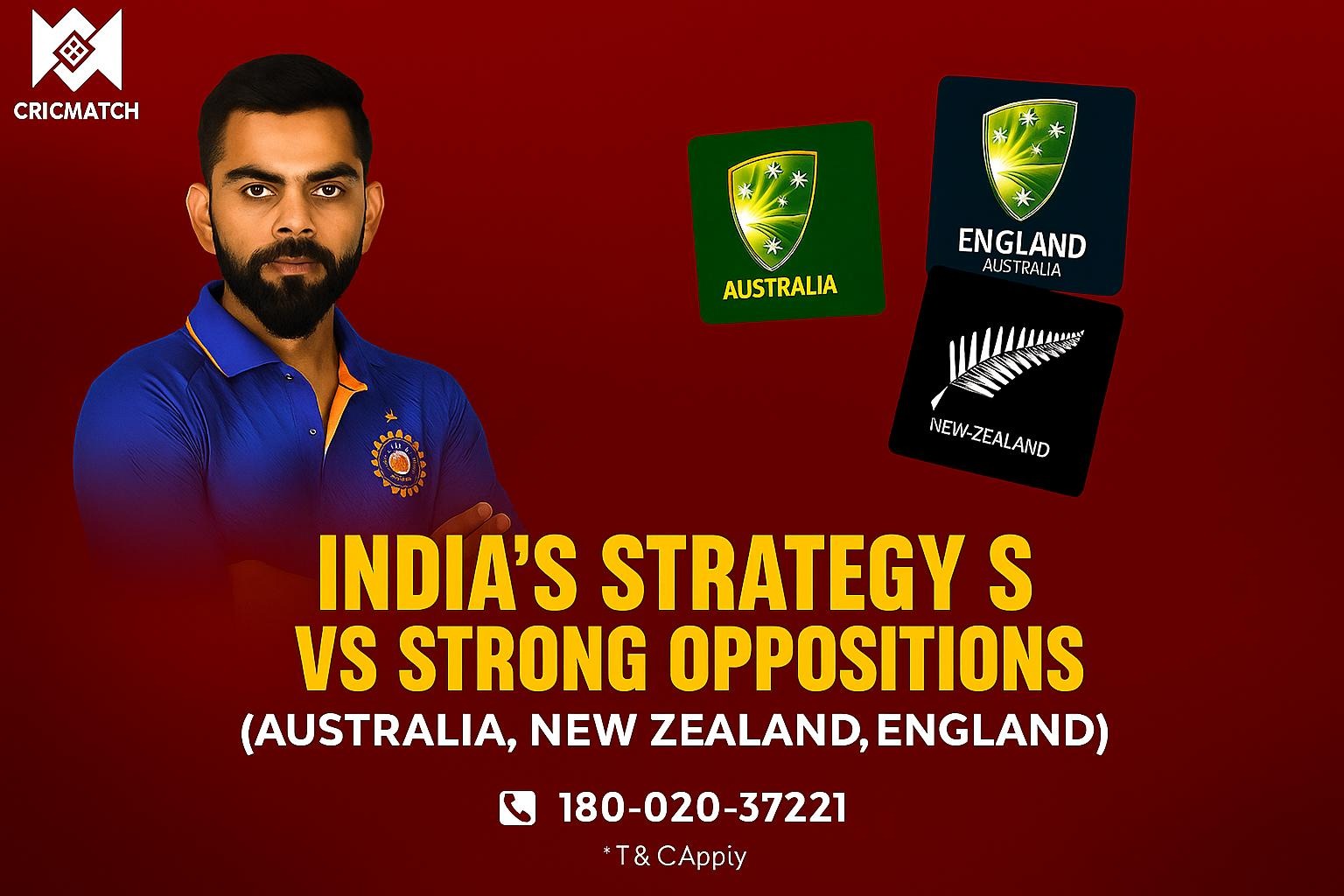
Facing top-tier cricketing nations has always defined India’s competitive edge. While bilateral series and tournaments against mid-table teams offer opportunities for experimentation, it is clashes with powerhouses like Australia, New Zealand, and England that truly shape strategies. These matches demand tactical clarity, flexibility in team selection, and a balance between attacking intent and structural discipline.
1. Tailoring Game Plans to Conditions
One of India’s biggest tactical shifts in recent years has been its condition-based planning. No longer relying solely on subcontinental strengths, the team adjusts its combination and approach depending on whether it’s playing in spin-friendly home venues or pace-heavy overseas conditions.
- Against Australia: India focuses on exploiting variable bounce with pace early on and then tightening control through experienced spinners in the middle sessions. Their strategy often includes batting long, blunting Australia’s pace attack, and taking the game deep into Days 3 and 4 in Tests.
- Against New Zealand: The key emphasis is countering swing with disciplined batting and playing late. India often rotates between seam-bowling all-rounders and two spinner-one pacer combinations depending on the ground.
- Against England: Reverse swing, overhead conditions, and disciplined batting are at the heart of India’s plans. This is where batting patience and tactical bowling changes become decisive.
2. Spin-Pace Equilibrium
The modern Indian strategy revolves around bowling balance. Against high-quality batting units, India leans on tactical pairings rather than just individual brilliance.
- Dual-spin threat: At home, Ravichandran Ashwin and Ravindra Jadeja form a control-and-strike partnership, making run-scoring difficult for visiting teams.
- Pace punch: Overseas, Jasprit Bumrah and Mohammed Siraj lead an attack that relies on seam movement and disciplined lengths.
- Rotation strategy: Keeping bowlers fresh across series is critical, especially when facing teams with aggressive batting units.
This mix of spin patience and pace hostility allows India to stay competitive across varying conditions.
3. Tactical Batting Blueprints
India’s batting plans have matured significantly against top teams:
- Versus Australia: Playing out the new ball with soft hands, rotating strike through the middle overs, and launching calculated counterattacks once the ball softens. Players like Rohit Sharma and Shubman Gill are often tasked with setting the tone early.
- Versus New Zealand: Patience is key — waiting for swing to fade before shifting gears. India uses anchor-accelerator pairs effectively here.
- Versus England: Partnerships and adaptability are central. India often focuses on wearing down the English seamers before cashing in against spinners.
The batting unit is no longer reliant on one or two pillars but on collective adaptability.
4. Fielding & Pressure Moments
Top teams rarely give second chances, which makes fielding intensity a strategic pillar. Against these sides, India emphasizes:
- High catching standards in slips and close-in positions.
- Quick ground coverage to save boundaries and build pressure.
- Direct-hit drills that create wicket opportunities from half-chances.
Especially in overseas Tests, these small moments can swing entire sessions.
5. Match-Up Strategies
Modern cricket thrives on match-up intelligence. India analyzes opponent weaknesses closely:
- Targeting specific batters with bowlers who’ve historically troubled them.
- Deploying spinners against certain left-right combinations at key intervals.
- Adjusting batting orders to neutralize opposition bowling bursts.
This data-driven microplanning is especially effective against structured sides like Australia and England, who themselves thrive on strategy.
6. Mental Edge and Long Game
Beating top teams isn’t just about skill — it’s about sustaining pressure over time. India’s leadership group increasingly focuses on:
- Session control: Winning small phases rather than chasing one big spell of dominance.
- Neutralizing crowd pressure: Particularly crucial in places like Melbourne, Lord’s, and Wellington.
- Leadership clarity: Ensuring tactical plans are simple, executable, and flexible.
This composure has helped India notch some of its biggest away victories in recent years.
Final Thoughts
As India continues to build a multi-format powerhouse, their strategy against top-tier teams stands as the ultimate benchmark. Whether it’s dominating spin battles at home or matching pace blow-for-blow overseas, the team’s adaptability will define upcoming tours.
Fans looking to track selection strategies, match-ups, and key tactical calls can explore detailed previews and expert analysis on the Cricmatch platform For more structured updates, behind-the-scenes insights, and series discussions, cricket followers can Cricmatch register to stay ahead of every major tour.